Personal Reflection
Nana: From Inspiration on Screen to a Lifelong Bond
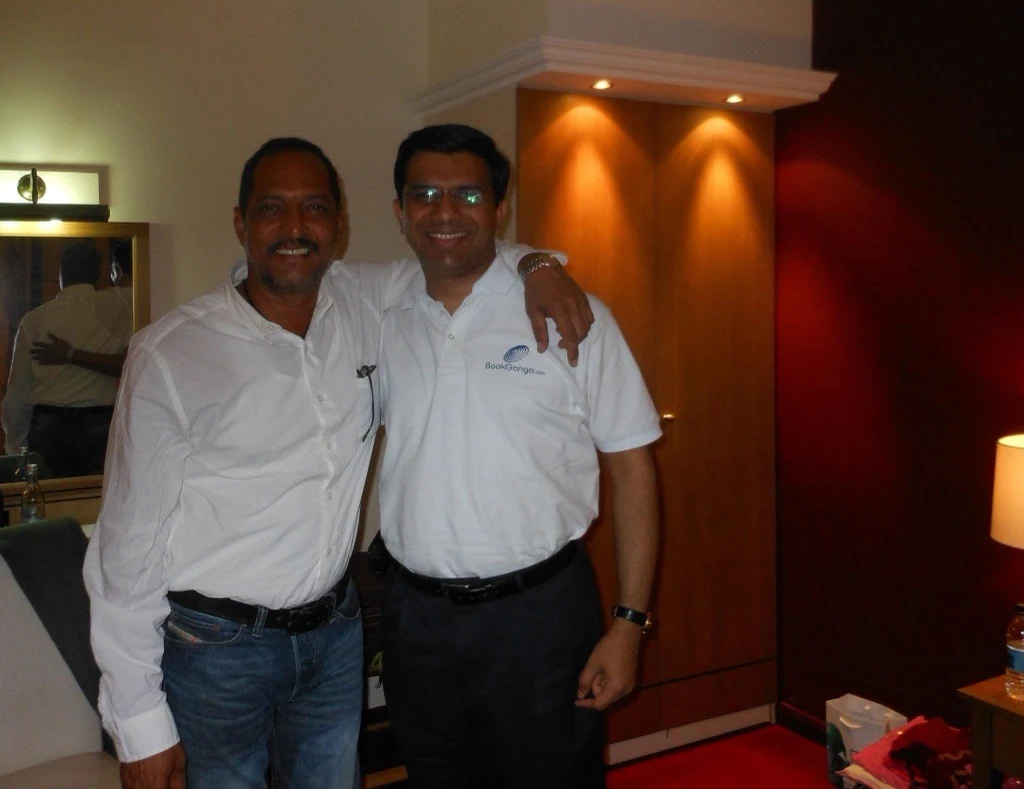
Some people enter our lives in person. Others come to us through a book, a song, or a film. They may not even know we exist, yet they quietly change the direction of our lives.
Nana Patekar first entered my life through the cinema screen.
But my story begins even earlier, with a flood in Sakharpa in 1983.
I grew up in Sakharpa, a small village in Ratnagiri district, Maharashtra. My father served in the Indian Army. After retiring, he opened a small grocery shop in our village. The flood of 1983 washed that shop away in a single night.
It was a severe financial blow to our family.
I was young then. Looking back now, I realize that the flood changed the course of my life.
1991: Pune, Vidyarthi Sahayyak Samiti and Prahaar
After completing Class 10, I moved to Pune for further education and began living in a hostel run by Vidyarthi Sahayyak Samiti, an organization that supports students pursuing higher education. Its volunteers, trustees, donors, and Earn and Learn programme gave a student from a rural background like mine the opportunity to continue studying.
But moving from a small village like Sakharpa to Pune was difficult. I struggled to adjust to the competitive atmosphere of the city.
My confidence began to crumble.
There came a point when I thought:
“I cannot do this. I should leave my studies and go back to Sakharpa.”
Around that time, I watched a film in a cinema for the first time in my life.
Prahaar.
And there, on the screen, was Nana Patekar.
Perhaps it was because my father had been in the Army. Perhaps it was because of what I was going through. Whatever the reason, Nana’s role in Prahaar touched something deep inside me.
However difficult the circumstances, you must face them. You must not run away.
The film ended. But for me, something new had begun.
I gave up the idea of leaving Pune and returning home.
Prahaar became a turning point in my life. And I became an ardent admirer of Nana.
Then one day, Nana stood before us
Later, I became the Gathering Secretary for Vidyarthi Sahayyak Samiti’s annual gathering.
An unlikely idea came to me:
“What if we invited Nana Patekar as our chief guest?”
My friends wondered how we could possibly reach such a big star. Even if we did, would he come to our small programme?
Then I learned that Nana held our trustee, Nirmalatai Purandare, in great respect. He called her “Aai”, meaning “mother”.
I told Nirmalatai my story. I explained how Prahaar had stopped me from abandoning my education and asked whether she could help us invite Nana.
To our astonishment, he came!
The stern, intense Nana on screen and the Nana we met in person seemed worlds apart.
He was simple, open, and warm. He made us feel as though he was one of us.
I told him everything: Sakharpa, my family’s circumstances, Pune, the Samiti, my thoughts of leaving my studies, and the change Prahaar had brought about.
He listened quietly. He was especially pleased to learn that my father had served in the Indian Army. He encouraged me to keep facing difficult circumstances with courage.
For Nana, it may have been a brief conversation with a student. For me, it became something I would carry for the rest of my life.
2009: Almost twenty years later
Life moved on. From Sakharpa to Pune, and eventually to the United States.
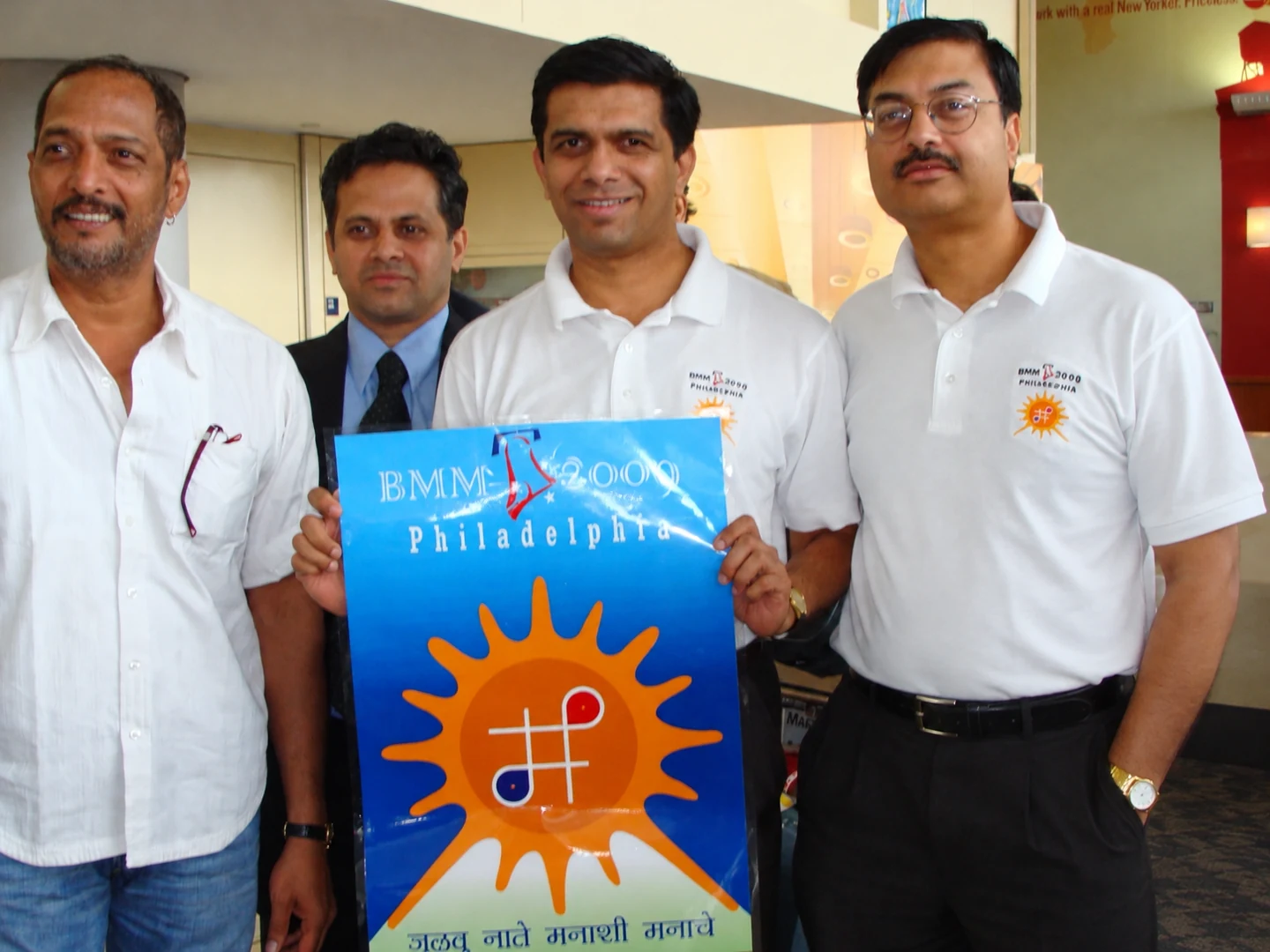
In 2009, we wanted to invite Nana as a chief guest to the Brihan Maharashtra Mandal (BMM) convention in Philadelphia.
I contacted him again.
Almost twenty years had passed. I began explaining who I was: the Samiti, Nirmalatai, that programme...
But he surprised me. Nana remembered me!
He remembered an ordinary student he had met nearly twenty years earlier.
He accepted our invitation and came to Philadelphia.
Something else stayed with me. He did not take an honorarium for himself. Instead, he asked that the money be donated to a charitable organization he cared about.
As I came to know him better, I saw this quality again and again. He helped many people and organizations, but drawing attention to himself or publicizing his generosity was never his way.
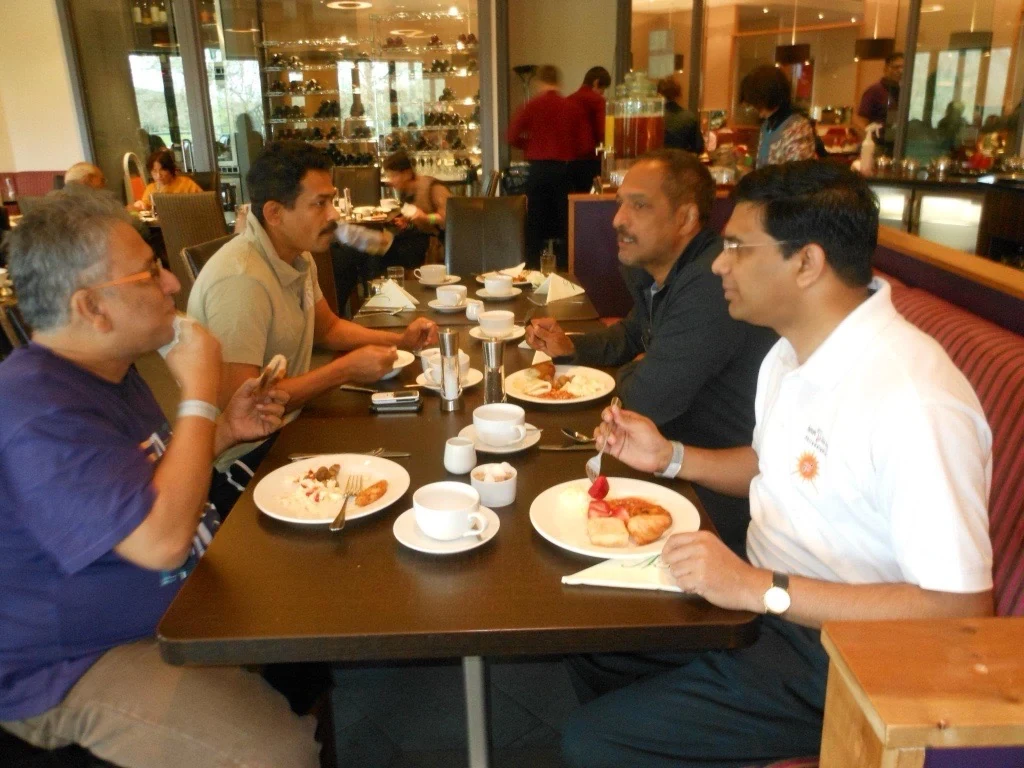
New York to Philadelphia, and a simple sandwich
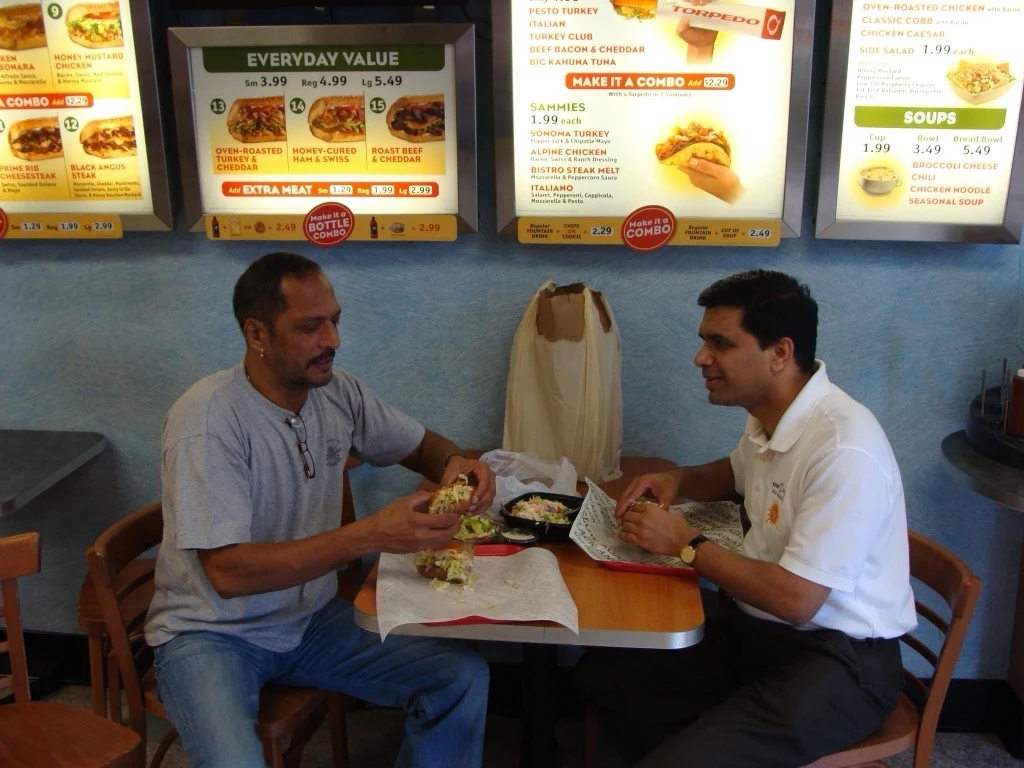
When Nana arrived in the United States, I drove him from New York Airport to Philadelphia myself.
Despite his long flight, he spent much of that two- or three-hour drive asking about my journey.
“How did this boy from Sakharpa find his way to Philadelphia?”
We talked a great deal.
During the journey, Nana became hungry. I began wondering which good restaurant would be suitable for such a big star.
But Nana made it simple. He was perfectly happy to stop anywhere for something ordinary to eat.
We stopped and had a simple sandwich.
People recognized him. They asked for photographs and autographs, and he interacted with everyone naturally and comfortably.
That day, I learned another lesson: you do not have to put on an air of importance to be truly great.
2012: Cardiff
In 2012, we met again at the European Marathi convention in Cardiff.
Nana would have one particular request:
“Find a hotel with a good gym.”
Even in his sixties, his discipline and fitness amazed me.
He also had some very personal fitness advice for me! He would grab my belly and say:
“Go to the gym. Lose some of this fat!”
Even his teasing carried a special warmth.
Nana at home
I also visited his home during Ganpati, the festival celebrating Lord Ganesha.
He loved decorating for the festival and took a wholehearted interest in it. Many people would visit his home for the celebrations.
There, I saw another side of Nana.
He was an excellent cook. And then there was his special tea, which he would make himself at home.
Imagine a superstar known across the country preparing tea in his own kitchen while you sit together, talking at ease.
At such moments, the actor, the celebrity, and the superstar all faded into the background.
There was simply Nana.
Nana, the poet
There was another side to him that many people may not have known. He wrote beautiful poetry, and he had written many poems.
I would keep urging him:
“Nana, let us publish your poems as a book.”
He read widely and loved literature. I sincerely wanted to see his poetry published.
Sadly, that book never came to be.
It remains one of the unfinished conversations I will always carry with me.
2016: Farmers, the Farmers App and NAAM
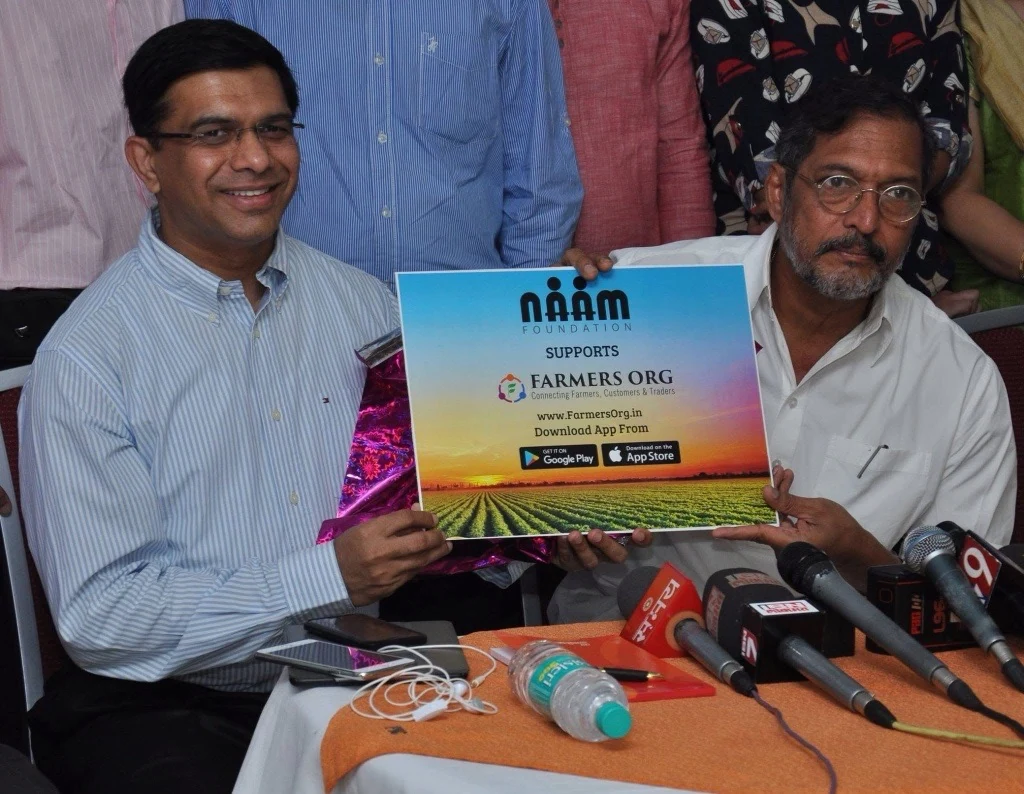
The work that Nana and Makarand Anaspure were doing for farmers through NAAM Foundation was deeply inspiring to us.
We developed an app for farmers and asked Nana to inaugurate it. He readily agreed.
Once, I had been a student asking him to attend our programme. Now, I was asking him to support an initiative for farmers.
Once again, Nana stood behind a good cause.
When the circle returned to Sakharpa
Perhaps the most remarkable coincidence in this entire story is this.
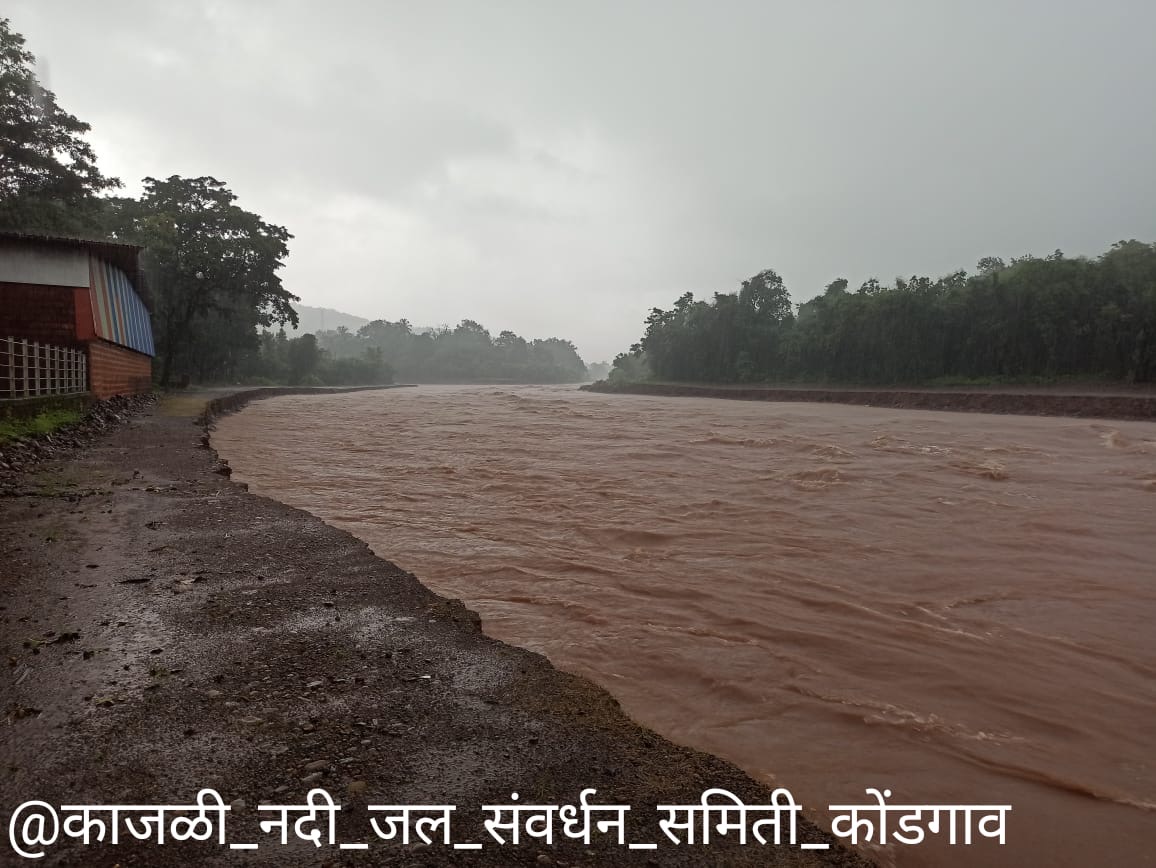
Where had my journey begun? Sakharpa. The flood of 1983.
The river whose flood had swept away our family’s small shop continued to cause flooding in Sakharpa during the monsoons in later years.
Many years later, with substantial help from NAAM Foundation, silt was removed from the river, and the flooding problem was greatly reduced.
At that moment, I felt that a circle in my life had closed.
The flood had given my life a different direction. Those circumstances had brought me to Pune. When I was ready to give up and return home, Nana’s Prahaar gave me the courage to keep going.
And years later, the foundation he had helped establish reached my own village and helped address the problem of that very same river.
Some coincidences are difficult to put into words.
2020: BookGanga and his love of books
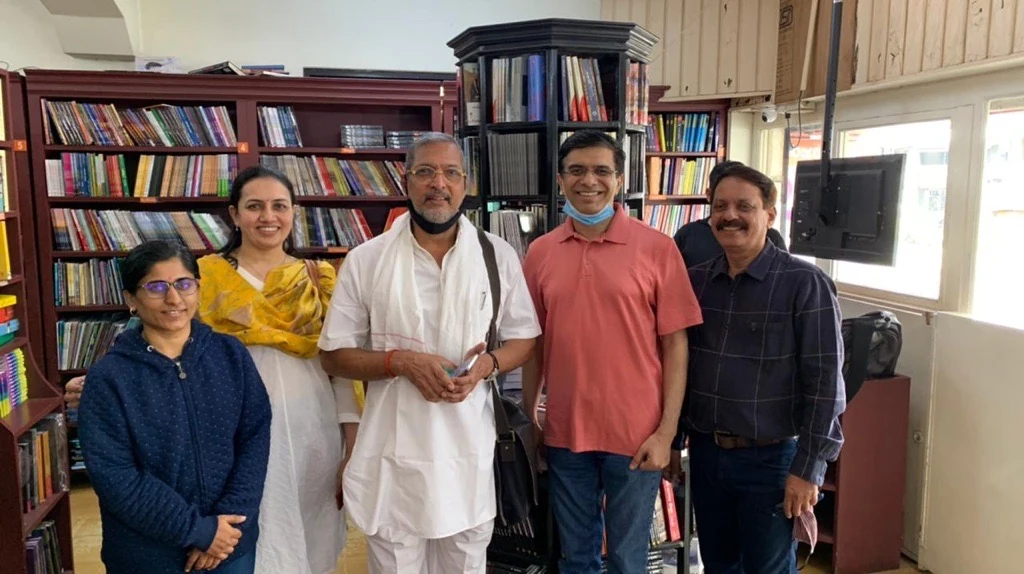
Later, Nana began visiting BookGanga International Book Store in Deccan Gymkhana, Pune.
He was very happy that we had built BookGanga.
He read extensively. He would browse the books, recommend titles to me, and always ask:
“What is new?”
I had once been a student struggling to find a way to meet an actor. Now, I was discussing literature with him in a bookstore I had helped build.
That journey meant a great deal to me.
2024: Mangoes from Nana
Nana would lovingly send mangoes from his farm.
It may seem like a small gesture, but relationships are nurtured through such small acts.
When someone remembers you from far away and sends mangoes from their farm with affection, the gift carries something much more than fruit.
Those mangoes were always special to me.
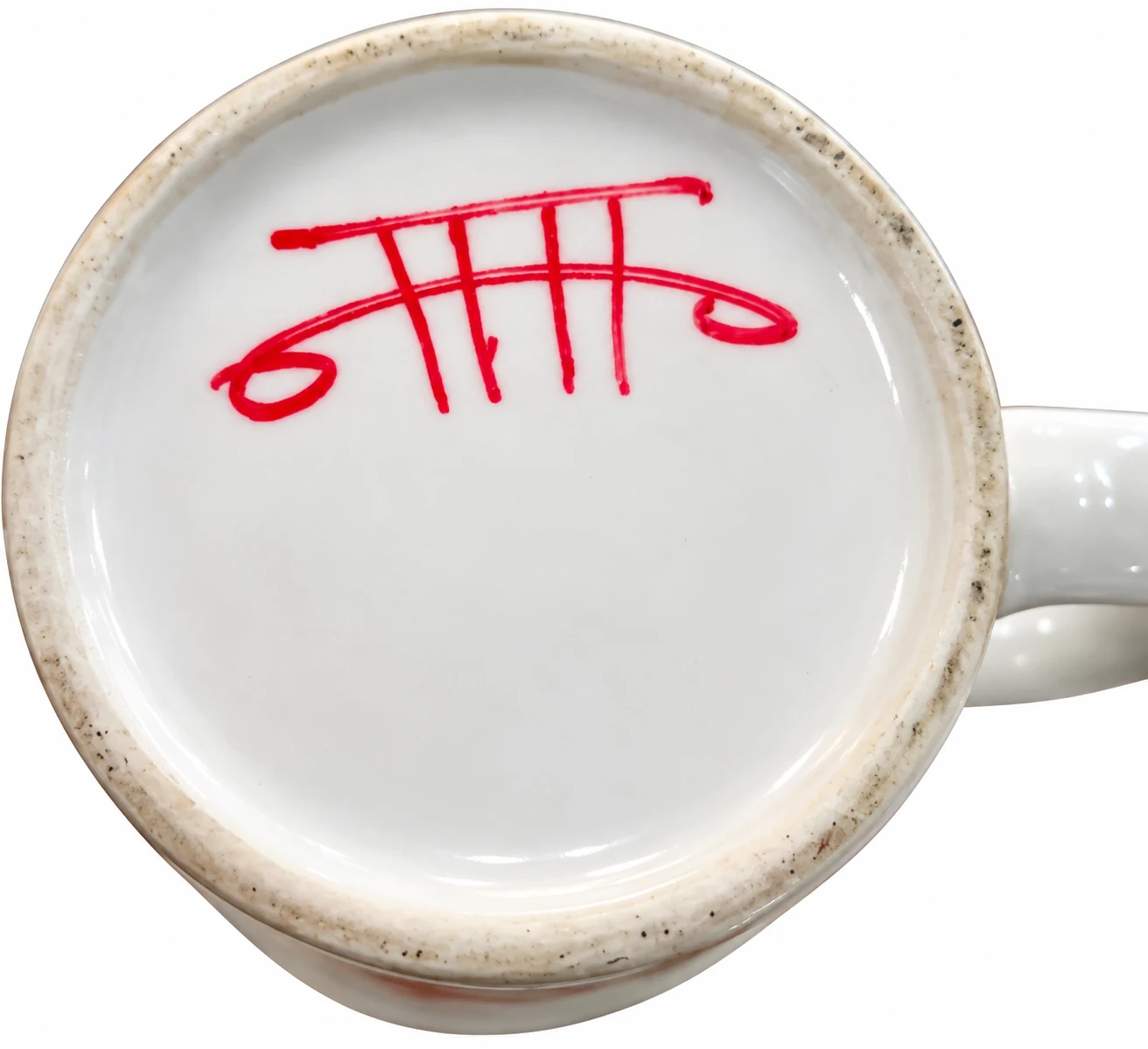
And that priceless cup
One gift from Nana, however, remains a treasure I will cherish all my life.
A cup.
It was no ordinary cup. It had been presented to Nana by the Indian Army.
He knew that my father had served in the Army, and he knew how proud I was of that background.
Instead of keeping the Army’s gift for himself, he gave it to me. And on it, in his own handwriting, he wrote:
“Nana.”
I told my father about the cup. He, too, was very fond of Nana.
When he learned that Nana had given his son a gift he had received from the Indian Army, my father said very little.
He simply saluted him.
I will never forget that salute.
That one cup seemed to bring three people together: my father, Nana, and me.
Today, when I look at it, I remember much more than Nana Patekar.
I remember the Sakharpa flood of 1983. My father, his Army life, and that salute. Vidyarthi Sahayyak Samiti. The frightened young man watching Prahaar. Nirmalatai. My first meeting with Nana at the Samiti.
I remember the drive from New York to Philadelphia and that simple sandwich. BMM. The gyms in Cardiff. Ganpati at his home. His tea. His unpublished poems.
I remember the farmers and NAAM, the river in Sakharpa, his familiar “What is new?” at BookGanga, and the mangoes he sent.
And beyond all these memories, I hear his affectionate voice:
“Mandar baala, how are you?”
Baala was his affectionate way of addressing me.
To the world, Nana was a great actor. To me, he became much more: an inspiration, a guide, a friend, and, over time, a caring elder.
A flood changed the direction of my life. A film gave me the courage to continue that journey. The man behind that film then became part of my life. And years later, his social work reached back to my own Sakharpa.
The circle was complete.
Nana is no longer with us. But I will always remember the determination, simplicity, discipline, and frankness he taught me. I will remember his instinct to do something for society and to stand beside others without seeking attention.
And I will have that priceless cup. A gift from the Indian Army, given to me by Nana, with “Nana” written in his own hand.
Nana, my father saluted you. I bow to you with gratitude. 🙏
Somewhere in my heart, I will always hear your voice:
“Mandar baala, how are you?”
A heartfelt tribute to you, Nana. 🙏💐